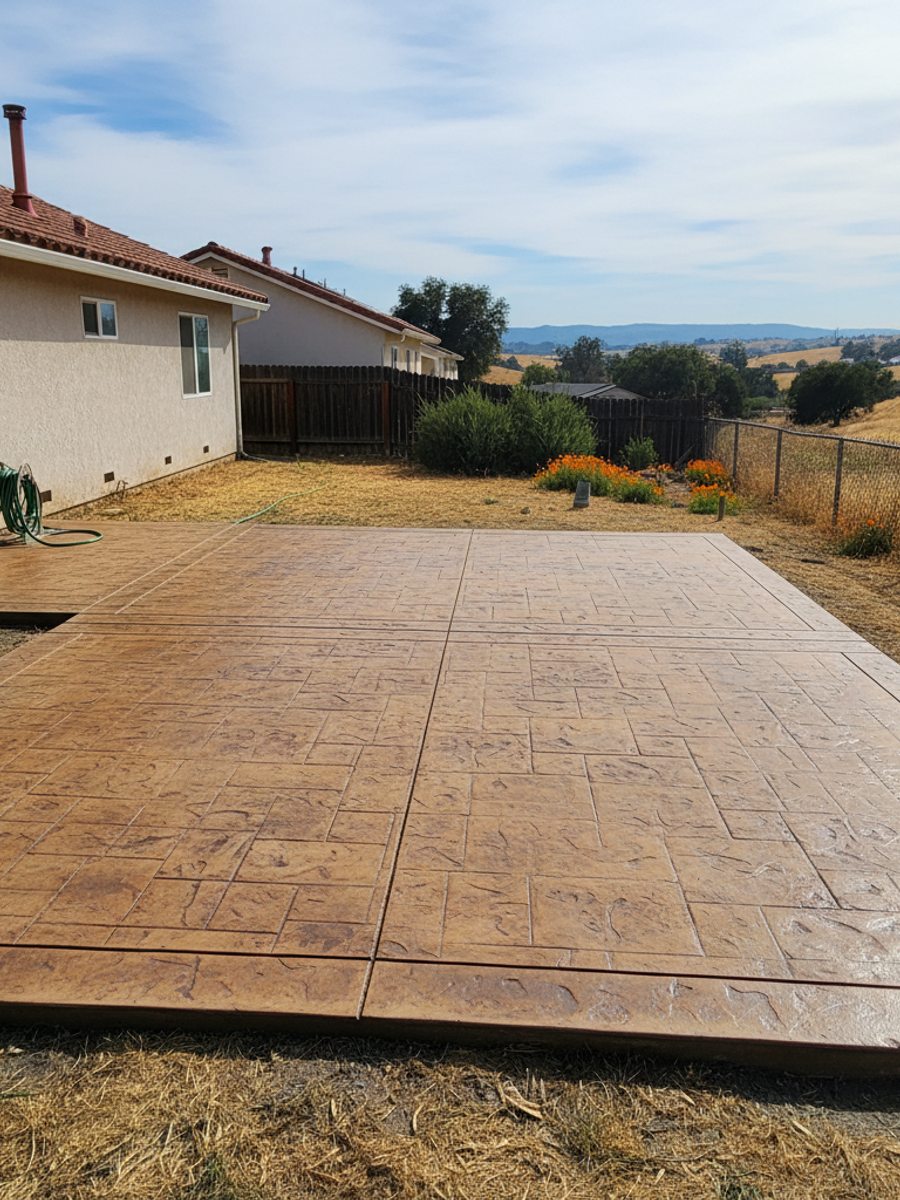
Los Angeles has more concrete contractors than almost any trade you'll hire for your house, and that's part of the problem. Anyone with a mixer truck relationship and a stack of business cards can call themselves a concrete guy. Telling the ones who know what they're doing from the ones who don't takes about ten minutes of the right questions, before you ever sign anything.
The work itself isn't complicated in theory. Dig it, form it, reinforce it, pour it, finish it, let it cure. What separates a driveway that's still flat in fifteen years from one that's cracked into puzzle pieces by year five is almost always what happened underground and what happened in the first 48 hours after the pour. That's where you want a contractor who can talk specifics, not just show you a portfolio.
Start with the ground, not the concrete
Los Angeles soil isn't one thing. Down in the basin, a lot of it is old alluvial fill with a decent amount of clay content, and clay swells when it's wet and shrinks when it's dry. That movement under a slab is what causes cracking, not usually the concrete mix itself. Areas like Sherman Oaks, Woodland Hills, and parts of the San Fernando Valley sit on soil that shifts more than people expect. Closer to the coast you get sandier, more stable soil that drains fast. Hillside lots in places like Eagle Rock or the Hollywood Hills bring a different problem entirely: slope, and sometimes fill dirt from decades-old grading that was never compacted properly.
A contractor who's done this a while will ask about your soil before they quote you a price, or at least walk the site and dig a test hole to see what's actually there. If the answer to "what's the sub-base going to be" is a shrug, that's worth noting. A proper base for a driveway or patio slab is usually 4 inches of compacted aggregate base at minimum, more on expansive clay, and it needs to be compacted in lifts, not just dumped and leveled by eye.
Ask what's actually going into the mix
Standard residential concrete in this area runs about 3,000 to 3,500 psi, though driveways that will see regular vehicle traffic often get bumped to 4,000 psi. Reinforcement matters too. Wire mesh is common and cheap, but it tends to sink to the bottom of the pour if nobody chairs it up properly, which means it does nothing. Rebar, usually #3 or #4 bar on an 18-inch grid, holds its position better and handles cracking under load a lot better on driveways or anything near a foundation.
Control joints are the other thing worth asking about directly. These are the intentional cut lines that tell the slab where to crack instead of letting it decide on its own. They should go in every 8 to 10 feet on a driveway, cut within the first 24 hours after the pour while the concrete is still green. A contractor who skips this, or waits three days, is asking for random cracking through the middle of your new slab.
Permits, setbacks, and the parts nobody thinks about
Most structural concrete work in the City of Los Angeles goes through LADBS, and a driveway apron or new sidewalk section that touches the public right-of-way usually needs a separate permit through the Bureau of Engineering, since that strip of concrete in front of your house is technically city property even though you maintain it. Retaining walls over a certain height, generally 4 feet including any surcharge from a slope above, trigger engineering review and inspection. Foundation work almost always does.
If you're in an unincorporated county area or one of the surrounding cities, the permitting office changes but the pattern doesn't: bigger structural work gets inspected, flatwork usually doesn't unless it's tied into drainage or a public sidewalk. Some neighborhoods also have HOA design review on top of city permits, particularly newer planned communities out toward Santa Clarita or Valencia, so it's worth checking your CC&Rs before you assume a permit is the only approval you need.
A contractor who pulls permits when the job calls for it is protecting you as much as themselves. One who tells you permits are "a waste of time and money" is telling you they've been burned by an inspector before, or they're not licensed to pull one in the first place.
The license and insurance check takes five minutes
In California, any concrete job over $500 in labor and materials legally requires a licensed contractor, and you can look up a C-8 concrete license number on the CSLB website in about a minute. Check that it's active, check that it's not suspended, and check the bond and workers' comp coverage while you're there. If someone hesitates to give you their license number, that's the whole conversation right there.
Ask for proof of general liability insurance too. Concrete work involves saw cutting, demo, sometimes trenching near utility lines, and if something goes wrong on your property you don't want to be the one covering it because the guy pouring your patio was uninsured.
What a bad quote looks like
- A price with no breakdown of thickness, base prep, rebar or mesh, and finish type. "$8 a square foot" tells you nothing about what you're getting for it.
- Pressure to pay the full amount up front, in cash, before any work starts.
- No mention of how they'll handle drainage. In a city where the wet season runs November through March and storms can drop an inch of rain in an hour, a patio or driveway poured with the wrong slope will pond water against your foundation every winter.
- Willingness to pour concrete during or right before a heavy rain forecast, which weakens the surface and can wash out the finish before it sets.
- No timeline for when you can walk on it (usually 24 to 48 hours) or drive on it (closer to 7 days), or vague answers about full cure time, which is 28 days regardless of what anyone tells you.
Older neighborhoods add their own wrinkle. Streets built in the 1920s through 1950s, in areas like Highland Park or mid-city, often have sidewalks lifted by ficus and jacaranda roots, and clay sewer laterals underneath that a good contractor will check for before cutting into a driveway near the curb. Newer subdivisions have fewer surprises underground but often stricter HOA rules on finish and color.
None of this is complicated once you know to ask about it. Get two or three quotes, ask each contractor the same questions about base prep, mix design, and joint spacing, and pay attention to who answers in specifics versus who answers in reassurances. That's the whole filter. If you want to see how we handle these decisions on our own jobs around the LA area, our concrete contractor work at Summit Concrete Solutions covers driveways, patios, foundations, and repair work across the region.